







Advocating for Yourself
Living with the chronic disease of obesity isn't always easy. Learning how to advocate for yourself and for others can be empowering.
Beginning July 1, 2026, Medicare will launch the Medicare GLP-1 Bridge, a temporary program that helps eligible people with Medicare Part D access certain GLP-1 medications for weight management. Click here to learn more.
Please read on to learn about obesity-related advocacy.
Your health care professional isn't the only one responsible for managing your health. You play an active role as well. After all, no one knows your body better than you.
Here are some ways you can be an effective self-advocate:
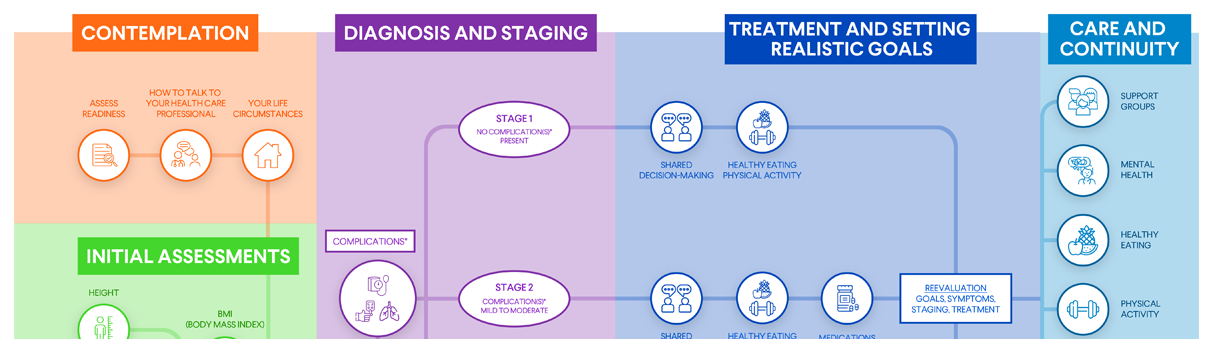
- Educate yourself: Learn about obesity, including common causes, diagnosis, and treatment, through resources like the AACE Journey for Patients With Obesity.
- Track your health: Note patterns in your eating habits, weight, sleep, and other factors that may be related to obesity and overall health.
- Be prepared: Before meeting with your health care professional, write down a list of questions that you want to discuss. Here are some ideas.
- Bring support: If it would be helpful in conveying your concerns or discussing your treatment plan, have a trusted family member or friend join you at your appointment.
- Demand respect: You deserve care that is stigma-free. If your health care professional makes an inappropriate comment about your weight, let them know they're being impolite. If it happens again, consider finding a different health care professional.
- Engage in shared decision-making: When your health care professional advises you on a treatment plan, be sure to voice any concerns that you have. Together, you can use shared decision-making to develop a plan that meets your needs and supports your goals.
- Speak up: Over time, let your health care professional know if any aspects of your treatment plan aren't working for you.
Advocating for Others
Giving a voice to the millions of Americans affected by the disease of obesity and empowering them along their journey toward better health: That's the focus of the Obesity Action Coalition (OAC), AACE's official patient advocacy partner.
Founded in 2005, the OAC is the country's leading advocacy group in the obesity space. This national nonprofit organization stands up against "pervasive weight bias and stigma, limited access to obesity healthcare and science-based treatment options, and a general lack of understanding around obesity."
In addition to advocacy, the OAC:
- Shares high-quality information to help people understand their diagnosis and options for treating obesity
- Raises awareness of obesity as a complex, chronic disease — not the result of a character flaw
- Offers a community of support for people living with obesity
Advocacy Resources and Tools
Visit the OAC Action Center to learn how you can help the OAC make a difference. While you're there, check out the Action Resource Toolbox, which includes a wide range of resources and tools to support your advocacy efforts.
Listen to our Advocacy in Action Podcast Series to learn how to equip yourself with the tools you need to advocate.




 DOWNLOAD