

It's okay for your liver to have a little fat. But if more than 5% of your liver's weight is fat, you have MASLD, which stands for metabolic dysfunction–associated steatotic liver disease. About 25% of people worldwide, including about 100 million people in the U.S., have this condition, according to the American Liver Foundation.
As a form of fatty liver disease, MASLD is linked to health conditions like obesity, type 2 diabetes, insulin resistance, and high cholesterol. It is not caused by drinking alcohol.
About 13% of people with MASLD also get MASH, which stands for metabolic dysfunction–associated steatohepatitis. MASH is a more severe and aggressive form of MASLD and can cause swelling, inflammation, and liver damage — or may stay silent and cause no symptoms at all.
Both MASLD and MASH are informally known as "fatty liver."
Who Is at Risk for MASLD and MASH?
People with overweight or obesity are more likely to get MASLD and MASH. The risk is even higher in people with type 2 diabetes. Other risk factors include:
- Being 40 or older
- Smoking
- High blood pressure
- High cholesterol
- Not moving around much
- A diet high in sugar and saturated fat
Some people get MASLD and MASH despite having none of the above risk factors. Scientists are looking at whether genes may play a role.
Learn more about MASLD and MASH, including complications, signs and symptoms, screening and diagnosis, treatment, prevention, and how to take an active role in your care through shared decision-making with your health care professional.
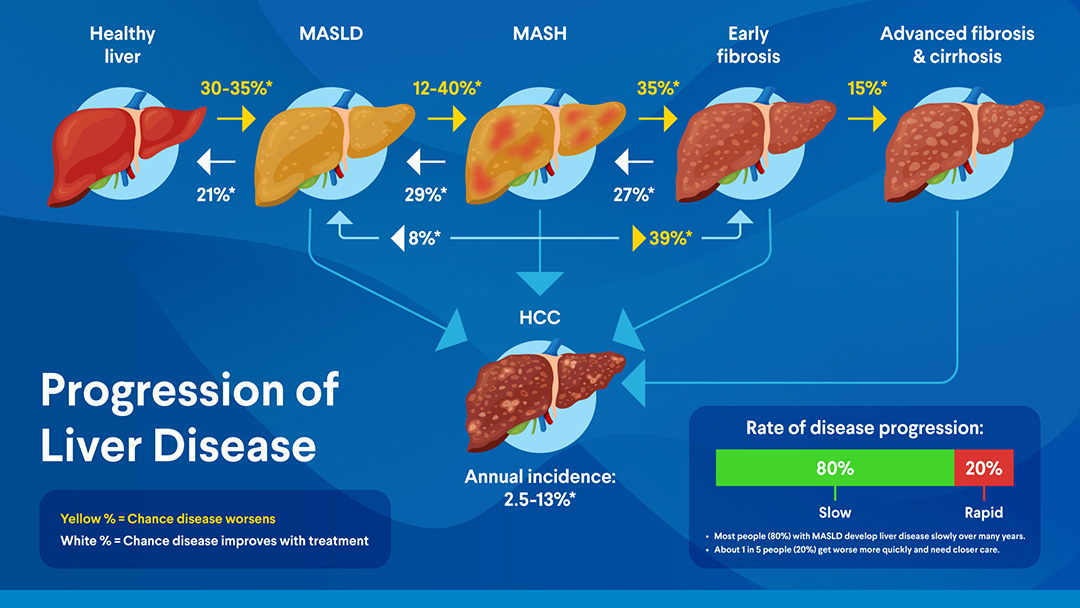
MASLD and MASH can lead to more serious complications, such as fibrosis (scar tissue in the liver). Fibrosis can progress to cirrhosis (severe scarring in the liver).
Cirrhosis, in turn, can disrupt blood flow through the liver and make it harder for the liver to clear toxins from the blood. It can also increase the risk of liver cancer and lead to liver failure.
MASLD is also associated with an increased risk of cardiovascular disease and type 2 diabetes. In addition, it may raise the risk of breast cancer and colorectal cancer.
Other complications of MASH, the American Liver Foundation reports, can include "fluid buildup in the abdomen, risk of internal bleeding, enlarged spleen, kidney failure, brain disorders, liver cancer, and coma."
Many people with MASLD or MASH don't feel sick at first.
Eventually, MASLD may cause symptoms such as:
- Fatigue
- General weakness
- Pain on the right side of the belly
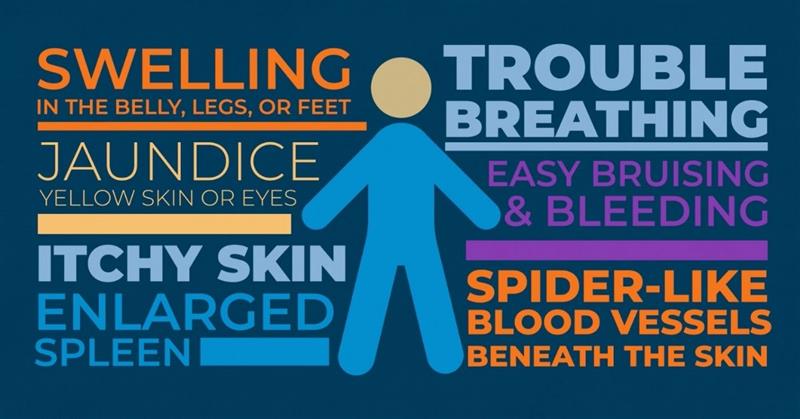
MASLD that progresses to MASH may cause symptoms such as:
- Itchy skin
- Swelling in the belly, legs, or feet
- Trouble breathing
- Easy bruising and bleeding
- Enlarged spleen
- Spider-like blood vessels beneath the skin
- Jaundice (yellow skin or eyes)
Since MASLD and MASH don't always cause symptoms, screening (checking for a disease despite the absence of symptoms) is critical. Catching either condition early makes treatment more effective. It can also prevent further damage to your liver.
If you are at high risk for MASLD or MASH, your health care professional may recommend screening. This may include:
- Blood tests to look for increased levels of liver enzymes or signs of liver damage
- Imaging studies to look for increased fat in the liver or signs of swelling, inflammation, or scarring
To diagnose MASLD or MASH, your health care professional will review your medical history and perform a physical exam. They may also order blood tests and/or imaging studies.
If your health care professional thinks you might have MASH, they probably will order a liver biopsy to be sure. This test involves using a thin needle to remove a small piece of your liver. A pathologist then examines the sample to look for signs of MASH.
The most helpful treatment for MASLD or MASH is losing weight. Taking these steps can help:
- Eating more fruits, vegetables, and healthy fats
- Avoiding sugary foods and alcohol
- Following a structured exercise program
Rezdiffra and Wegovy are the only two FDA approved medications to treat adults with metabolic dysfunction–associated steatohepatitis (MASH) who have moderate to advanced liver scarring (fibrosis), but who do not yet have cirrhosis. When combined with a healthy diet and increased physical activity, these two medications may lead to a decrease in the amount of fat in the liver.
If you have obesity and/or type 2 diabetes, your health care professional may recommend taking insulin and weight-management medications. Obesity (bariatric) surgery may also be an option.The following lifestyle changes can help prevent MASLD and MASH and even slow down or reverse the buildup of extra fat in your liver:
- Following a Mediterranean diet: Vegetables should make up about half of your plate.
- Being active: Exercise 150 minutes a week (e.g., 30 minutes, five times a week).
- Maintaining a healthy weight
MASLD and MASH can hurt your health by increasing the risk of other conditions like cardiovascular disease. They may also shorten your life expectancy.
While there's no cure for MASLD or MASH, lifestyle changes can make a big difference. Losing 5% or more of body weight may reduce liver fat. Losing 10% or more may reverse liver fibrosis or MASH. Your health care professional can help you create a plan for losing weight in a healthy way.

Why do you think it’s important to take an active role in your healthcare decisions?
As a recently diagnosed patient with stage 3 MASH it has come to my attention after researching my disease that I should have been advocating for myself a long time ago. Doctors were not piecing together liver enzyme lab results with other metabolic abnormalities to diagnose MASH early. There was no treatment for the disease in the past, so they simply told patients to lose weight and stop drinking alcohol. Since drinking alcohol was not an issue for me, this advice was not helpful.
After having an appointment with a gastroenterologist who specializes in liver issues, I was finally properly diagnosed and am on a treatment regimen. It is important to follow up and continue to follow the advice of your doctors, but I believe it is equally important to actively question your care and challenge your doctors to find out what the best care can be for yourself.
What advice or encouragement would you offer to others facing a similar journey?
Staying on the routine of eating well: Limit calories to a healthy amount for your ideal weight, eat fresh foods that include a lot of vegetables and fruit, eat no "processed foods", exercise daily, avoid stress, seek out positive things to do. I know this sounds idealistic, but small steps every day have helped me get to be the best I have been in a long time. Read about your diagnosis to learn what you can do to prolong your life. Don't obsess over it, but get informed. Find other people who have your disease. It helps to discuss what you have with others and to encourage each other. Don't give up. Keep trying to be the best self you can be.
Jeff B.

Check out the following resources, support groups, and organizations:
- American Liver Foundation, offers free resources, educational materials, caregiver resources, infographic, and Caring Connections (a peer-to-peer support program)
- British Liver Trust Online Support Groups
- Community Liver Alliance
- Fatty Liver Alliance
- Life With MASH: An American Liver Foundation Support Group
- Liver Education Advocates
- myMASHteam